Breakaway Training: What It Covers and Who Needs It
Breakaway training teaches staff simple, non-restrictive techniques to free themselves from a grab or hold and move to safety. It is not about fighting back or restraining anyone. The aim is to get out of harm's way quickly, with as little force as possible, and then get help.
Most incidents never become physical. Staff who can read early warning signs, keep a safe distance and use calm communication will rarely need a breakaway technique. When they do, a well-practised response can prevent serious injury to everyone involved.
This guide explains what breakaway training covers, who needs it, what the law says and how to keep the skills fresh.
Please note: This article provides general information, not legal or case-specific advice. Follow your organisation's risk assessments, policies and lone working procedures. The scenario is a fictional learning example.
What is breakaway training?
Breakaway techniques are physical skills that help a person release themselves, or a colleague, from a hold and create distance. They are designed to be simple, quick to use under stress and low risk to the person who has grabbed you.
Breakaway is different from physical intervention. Physical intervention involves holding or guiding another person, which carries more risk and needs a clear legal and policy basis. Breakaway is about disengaging and leaving. Our guide to physical intervention in schools explains the difference in more detail.
Good breakaway training sits inside a wider approach to reducing restrictive practice, where prevention and de-escalation always come first. Our guide to restrictive practices in Wales sets out that framework.
Who needs breakaway training?
Any role where a risk assessment identifies a foreseeable risk of being grabbed, held or assaulted. Common examples include:
- Residential and children's home staff supporting young people in crisis
- Teaching assistants and school staff working with learners who may become distressed
- Care workers in adult care, supported living and domiciliary care
- Lone workers who visit people in their homes
- Reception, housing, security and customer-facing staff
The right level of training depends on the setting. A receptionist may need personal safety awareness and a few core techniques. A residential worker supporting a young person with a history of aggression may need a fuller course and more frequent practice.
What does the law say?
Two areas of law are relevant: the employer's duty to protect staff and the individual's right to defend themselves.
Employer duties. The Health and Safety at Work etc. Act 1974 requires employers to protect the health, safety and welfare of their employees, so far as is reasonably practicable. The Management of Health and Safety at Work Regulations 1999 require them to assess risks, including the risk of violence. HSE guidance lists training staff in appropriate breakaway techniques as one way to control that risk, alongside better reporting, safer environments and adequate staffing. The HSE's guidance on work-related violence is a useful starting point.
Self-defence. Everyone may use reasonable force to protect themselves or others. This comes from common law and section 3 of the Criminal Law Act 1967, which allows reasonable force to prevent crime. Section 76 of the Criminal Justice and Immigration Act 2008 explains how a court judges whether force was reasonable, based on the circumstances as the person honestly believed them to be.
In practice, this means force must be necessary, proportionate and stop as soon as you are safe. Breakaway techniques are built around that principle.
Some injuries caused by violence at work must also be reported to HSE under RIDDOR. Your organisation's incident procedure should make clear who does this.
What a good course covers
Techniques are only one part of the training. A good course should cover:
- Recognising early signs of distress and escalating behaviour
- Calm verbal and non-verbal communication
- Personal space, positioning and keeping an exit route clear
- Releases from wrist, arm and clothing grabs
- Releases from hair pulls, bites and holds from the front or behind
- Moving away safely and summoning help
- The law on reasonable force and when to stop
- Recording, reporting and debriefing after an incident
Staff also need to practise dynamic risk assessment, so they can judge in the moment whether to stay, step back or leave. Our guide to de-escalation techniques covers the communication side in more depth.
What makes breakaway techniques work under pressure
Under stress, fine motor skills and memory both suffer. The techniques that work best share a few features:
- Few and simple. A small set of movements that work for many situations is easier to recall than a long list of specific moves.
- Natural movement. Techniques should use the body's natural mechanics, such as turning against the weakest part of a grip, rather than strength.
- Movement away. Every technique should end with creating distance and moving towards safety or help.
- Regular practice. Skills fade quickly. Short refreshers and team practice help staff respond without freezing.
Example: a wrist grab in a hallway
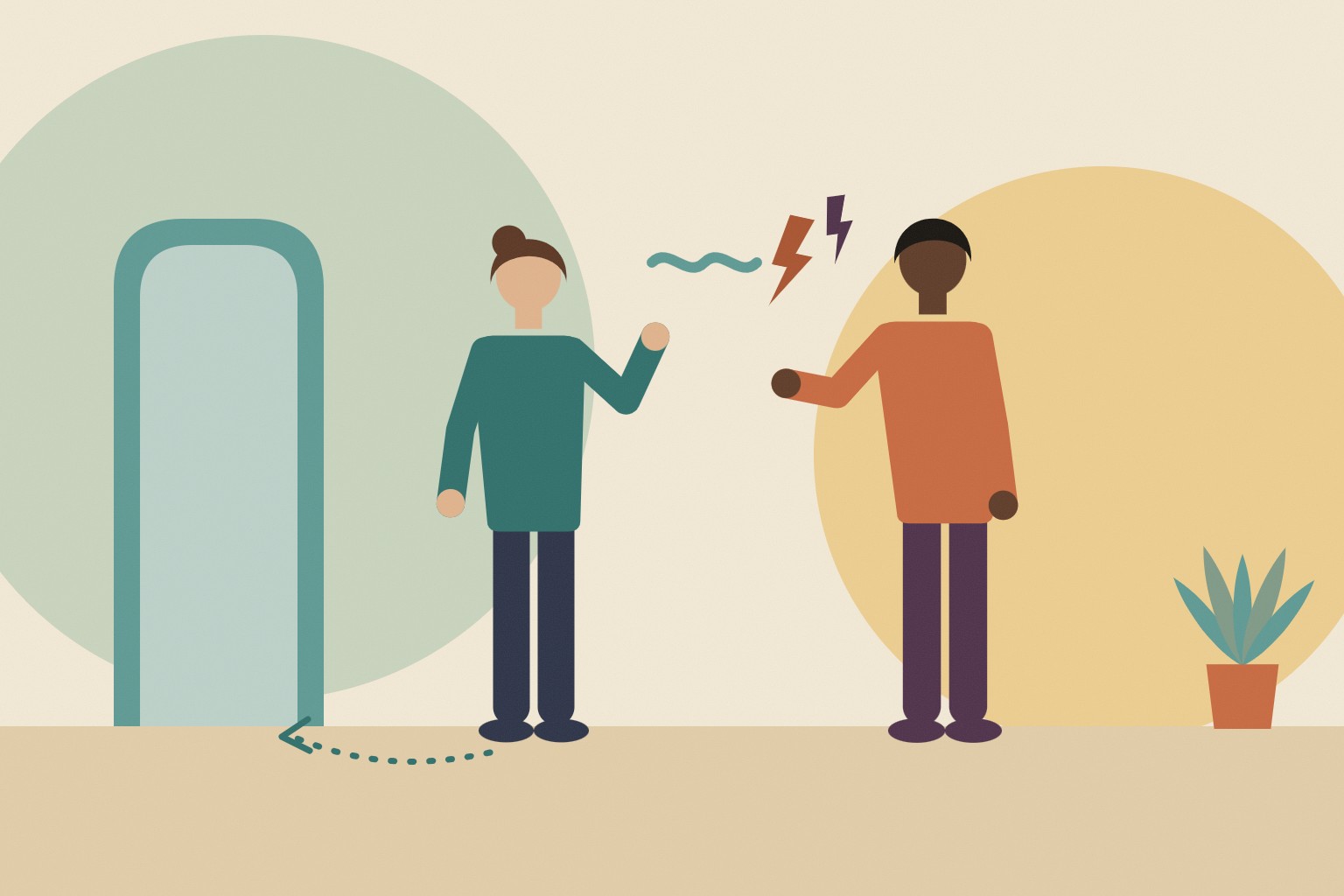
The situation: A support worker in a supported living service is walking with a resident who becomes distressed after a phone call. In a narrow hallway, he grabs her wrist tightly and starts shouting.
A useful response: She keeps her voice low and steady: “I can see you're upset. I want to help. Let go of my arm and we can sort this out.” When he does not let go, she turns her wrist against his thumb, steps back to a safe distance and keeps talking. She positions herself near the open end of the hallway and calls a colleague using her alarm.
Once the resident is calmer, she records what happened, reports it and takes part in a debrief. The team reviews his support plan and agrees how to respond to future difficult phone calls.
Breakaway is the last line of defence
Training should never be the only control. Organisations reduce risk most effectively by combining it with:
- Individual support plans that identify triggers and what helps
- Safe staffing levels and clear lone working procedures
- Personal alarms and reliable ways to call for help
- Environments with clear exits and fewer pinch points
- Post-incident support for staff, including time to talk
Frequently asked questions
Is breakaway training a legal requirement?
No law names breakaway training specifically. However, employers must assess and control the risk of violence to staff. Where that risk is foreseeable, training is usually a reasonable and expected control.
What is the difference between breakaway and physical intervention?
Breakaway helps you disengage and move away. Physical intervention involves holding or guiding another person and needs a clear legal basis, policy and more in-depth training.
How often should staff refresh their training?
Skills fade without practice, so most organisations refresh at least once a year. Staff in higher-risk roles benefit from shorter, more frequent practice sessions.
Can breakaway techniques hurt the other person?
Well-taught techniques are designed to be low risk, but any physical contact carries some risk. That is why they are used only when needed and stop as soon as you are safe.
Give your staff the confidence to stay safe
Staff who know how to read a situation, de-escalate and safely disengage are less likely to be hurt and more likely to keep a relationship intact after an incident.
SLC Training delivers Breakaway & Self-Defence training through NFPS-accredited instructors for children's homes, schools, adult care services and workplaces in any industry. Contact SLC Training to discuss training for your team.