

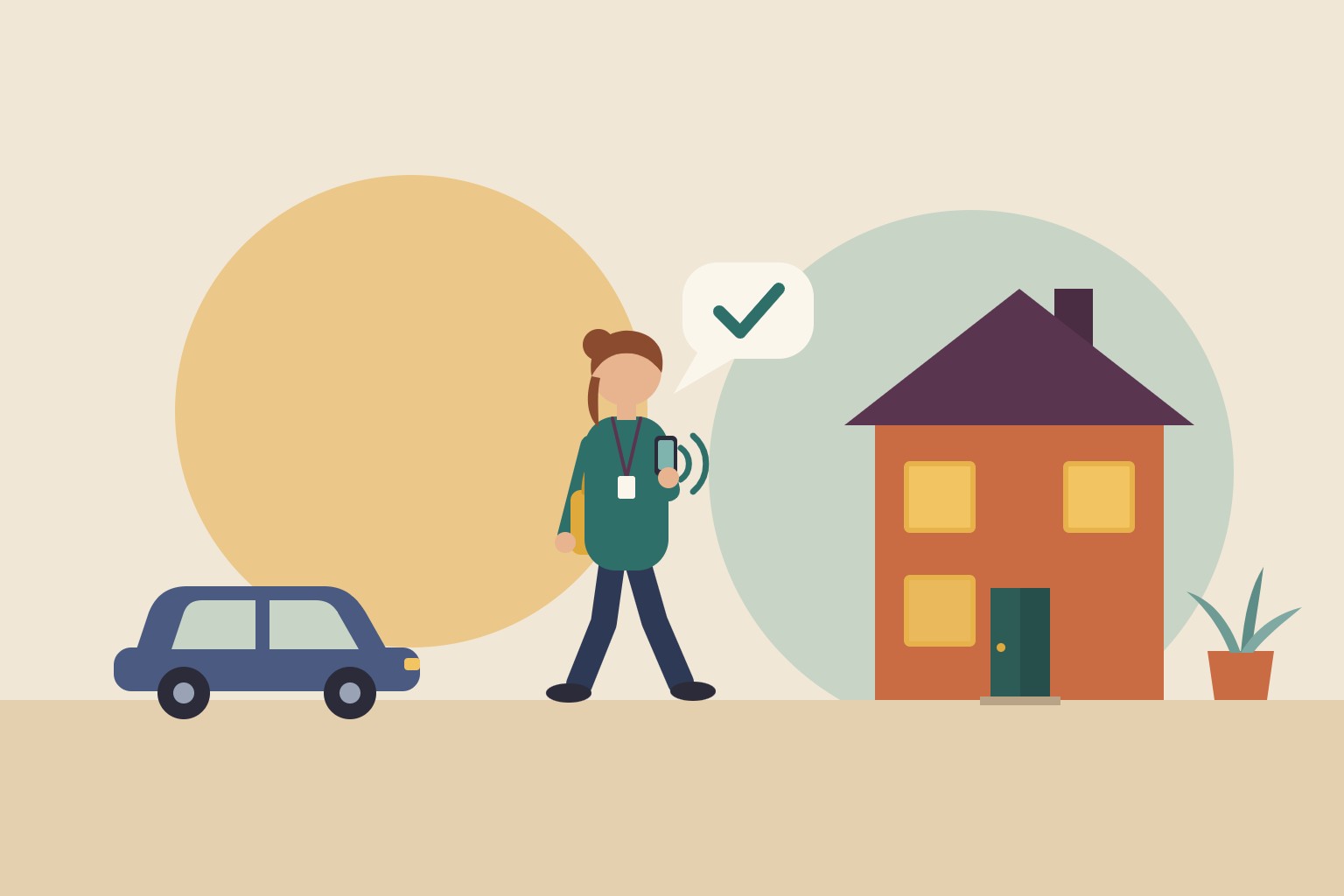
Lone working is part of everyday life in care and support services. Domiciliary care workers visit people at home, supported living staff work shifts on their own, outreach workers meet people in the community and staff in small services may cover nights alone. Working alone is not against the law, but it changes the risks, because there may be no one nearby to help if something goes wrong.
The Health and Safety Executive (HSE) defines a lone worker as someone who works by themselves without close or direct supervision. That includes people who work alone at a fixed base, people who travel between visits and people who work in other people's homes.
This guide covers what the law expects, the main risks for lone workers in care, how to build safe systems and what to do after an incident.
Please note: This article provides general information, not legal or health and safety advice. Follow your organisation's policies and risk assessments, and seek competent advice for your own service. The scenario is a fictional learning example.
Why it matters
Violence and aggression are among the most serious risks for people who work alone. HSE figures from the Crime Survey for England and Wales show:
- an estimated 689,000 incidents of violence at work in 2024/25
- 370,000 of these were assaults and 319,000 were threats
- health and social care associate professionals were the second highest-risk occupational group, with 2.7% experiencing violence at work, against 1.2% across all occupations (2023/24 and 2024/25 combined)
Lone workers face the same hazards as anyone else at work. The difference is that help may be further away, problems may go unnoticed for longer and staff have to make judgement calls on their own.
What does the law say?
There is no specific law against lone working, but employers' general duties apply in full:
- Health and Safety at Work etc. Act 1974: employers must protect the health, safety and welfare of their employees, so far as is reasonably practicable
- Management of Health and Safety at Work Regulations 1999: employers must assess risks, including risks to lone workers, and put controls in place. If you employ five or more people, the significant findings must be recorded
- Reporting of Injuries, Diseases and Dangerous Occurrences Regulations 2013 (RIDDOR): work-related violence that results in a death, a specified injury or a worker being unable to do their normal work for more than seven days must be reported to HSE
- Equality Act 2010: employers may need to make reasonable adjustments, for example for a lone worker with a health condition
HSE's guidance, Protecting lone workers: How to manage the risks of working alone (INDG73), explains how to apply these duties. It is clear that employers should provide training, supervision, monitoring and support for people who work alone.
In Wales, providers of regulated care and support services also have duties under the Regulated Services (Service Providers and Responsible Individuals) (Wales) Regulations 2017 to make sure staff are suitably trained, supervised and supported. Employees have duties too: to take reasonable care of themselves and others, follow safe systems of work and report concerns.
The main risks for lone workers in care
- Violence and aggression: from the person being supported, family members, visitors or members of the public
- Medical emergencies: the worker, or the person they support, becoming unwell with no one else there
- Moving and handling: tasks that need two people being attempted by one
- Travel: driving or walking alone, often early or late, sometimes in rural areas with poor phone signal
- Unfamiliar or unsafe homes: dogs, hazards, drug use, weapons or other people present, including homes that may have been taken over by criminals
- Allegations: being alone with a person at risk can leave staff more exposed to allegations, which is why clear boundaries and good recording matter
- Stress and isolation: HSE recognises that lone working can affect mental health, partly because support from colleagues and managers is less immediate
Carrying out a lone working risk assessment
Lone working should be part of your general risk assessment, not an afterthought. Questions to ask include:
- Can the task be done safely by one person? Some cannot. A known history of violence, certain moving and handling tasks or a new, unassessed referral may need two staff.
- Who will the worker meet? What is known about the person and anyone else likely to be there?
- Where and when? Think about the location, the route, parking, phone signal and time of day.
- Is the worker suitable? Consider experience, training and health. New staff may need to be accompanied at first.
- What could go wrong? Plan for foreseeable emergencies, such as an assault, a fall, a vehicle breakdown or a sudden illness.
Share risk information before visits, involve staff in the assessment and review it after incidents, near misses and changes in a person's needs.
Keeping in touch: safe systems for lone workers
A good system makes sure someone always knows where a lone worker is, and notices quickly if something is wrong. It might include:
- an up-to-date rota or diary showing where each worker is and when
- check-in calls or messages at the start and end of visits or shifts
- a clear escalation procedure if a worker misses a check-in: who calls, how long they wait and when the police are contacted
- an agreed code word or phrase, so a worker can ask for help without alerting the person they are with
- a lone worker device or app with an alarm and location sharing
- a charged phone, with key numbers saved
Test the system regularly. A procedure nobody has practised is unlikely to work at 9pm on a Saturday.
Staying safe on a visit
Before you arrive
Read the risk information. Park somewhere well lit, facing the way out. Take a moment to look and listen before you go in.
At the door
Notice who answers, their mood and who else is there. If something does not feel right, you do not have to go in.
Inside
Know your way out and avoid being blocked into a room. Keep your phone and keys on you. Keep reassessing as things change: our guide to dynamic risk assessment in care shows how.
If tension rises
Stay calm, keep your voice low and give the person space. De-escalation techniques resolve most situations. If they do not, leave. Your safety comes first, and the visit can be rearranged with support.
If you cannot get away
Breakaway techniques are a last resort to help you escape a grab or hold and get to safety. Our guide to breakaway training explains what it covers.
After an incident
- Get to safety and get medical help if needed
- Contact your manager or on-call, and call 999 if there is an immediate risk
- Record what happened as soon as possible, sticking to the facts
- Report to HSE under RIDDOR if the injury meets the criteria
- Offer a timely debrief and ongoing support, including occupational health or an employee assistance programme
- Review the risk assessment and decide whether future visits need two staff or a different plan
- Raise a safeguarding concern if the incident suggests someone is at risk
Encourage staff to report every incident, including verbal abuse and threats. HSE's definition of work-related violence covers abuse and threats as well as physical assaults, as long as they happen in circumstances relating to work. Our article on mental health awareness at work covers supporting staff after a difficult incident.
Example: a lone worker uses the code word
The situation: A support worker arrives for an evening visit to a man she supports in his own flat. His brother is there, has been drinking and becomes hostile when she starts the visit, standing between her and the door.
A useful response: She keeps her voice calm, rings the office as if to check a medication time and uses the agreed code phrase. She tells the brother she will give them some space and moves towards the door. The on-call manager rings back two minutes later, as agreed, giving her a reason to leave.
Once outside, she drives to a safe place and calls the manager. The incident is recorded the same night, she has a debrief the next day and the next two visits are carried out by two staff while the risk assessment is reviewed. The manager also considers whether a safeguarding concern should be raised for the man she supports.
What training do lone workers need?
HSE notes that training matters more when supervision is limited. Lone workers in care typically benefit from:
- conflict management and de-escalation
- breakaway and self-defence
- dynamic risk assessment
- safeguarding adults or children, depending on the service
- first aid
- your own lone working procedures, practised in realistic scenarios
Managers need to understand the risks too, so they can set clear limits on what can be done alone, support staff after incidents and keep risk assessments up to date.
Frequently asked questions
Is lone working legal?
Yes. There is no general ban on working alone, but employers must assess the risks and put suitable controls in place.
Do we need a separate lone working risk assessment?
Not necessarily. HSE says risks to lone workers should be included in your general risk assessment. If you employ five or more people, the significant findings must be written down.
Can a care worker refuse to work alone?
Staff should raise concerns with their manager, who should review the risk assessment. Employment law also protects employees who leave, or refuse to return to, a situation they reasonably believe is seriously and imminently dangerous.
Does verbal abuse count as violence at work?
Yes. HSE's definition of work-related violence includes abuse and threats, not just physical assault.
What should a lone working policy include?
Who it applies to, how risks are assessed, which tasks must not be done alone, check-in and escalation procedures, the equipment provided, training, how incidents are reported and how staff are supported afterwards.
Keep lone workers safe and supported
Lone working does not have to mean working unprotected. With a sound risk assessment, a reliable check-in system and staff who are trained to spot risk, calm tension and get away safely, people can work alone with confidence.
SLC Training delivers Breakaway & Self-Defence training, taught by NFPS-accredited instructors, alongside Conflict Management training for care and support services across South Wales. Contact SLC Training to discuss training for your team.